
Digital Product Passport Regulations and Standards: What Businesses Need to Know

The furniture industry is at a turning point. With the European Union introducing regulations such as the Ecodesign for Sustainable Products Regulation (ESPR) and the Corporate Sustainability Reporting Directive (CSRD), sustainability, transparency and circularity are becoming essential. At the center of this transformation is the Digital Product Passport (DPP) — a tool designed to improve traceability and lifecycle transparency across supply chains.
However, one key question remains:
Should companies wait for standardized guidelines, or start implementing Digital Product Passports today?
Why Sustainability and Transparency Matter Now
The furniture industry has a significant environmental impact.
Key challenges include:
high reliance on non-sustainable materials contributing to deforestation and biodiversity loss
linear product lifecycles generating large amounts of waste
complex supply chains that limit product transparency
Furniture accounts for up to 10 million tons of landfill waste annually in Europe, highlighting the need for more circular systems.
Digital Product Passports are designed to address these challenges by providing structured product data that supports repair, reuse and recycling.
The Role of Digital Product Passports in EU Regulation
Digital Product Passports are a central component of the EU’s sustainability strategy.
They enable:
product-level transparency
lifecycle tracking
improved resource efficiency
circular product systems
According to Eurostat, the circularity rate of material use in the EU reached 11.8% in 2023, showing progress but also highlighting the need for further improvement.
The Standardization Challenge
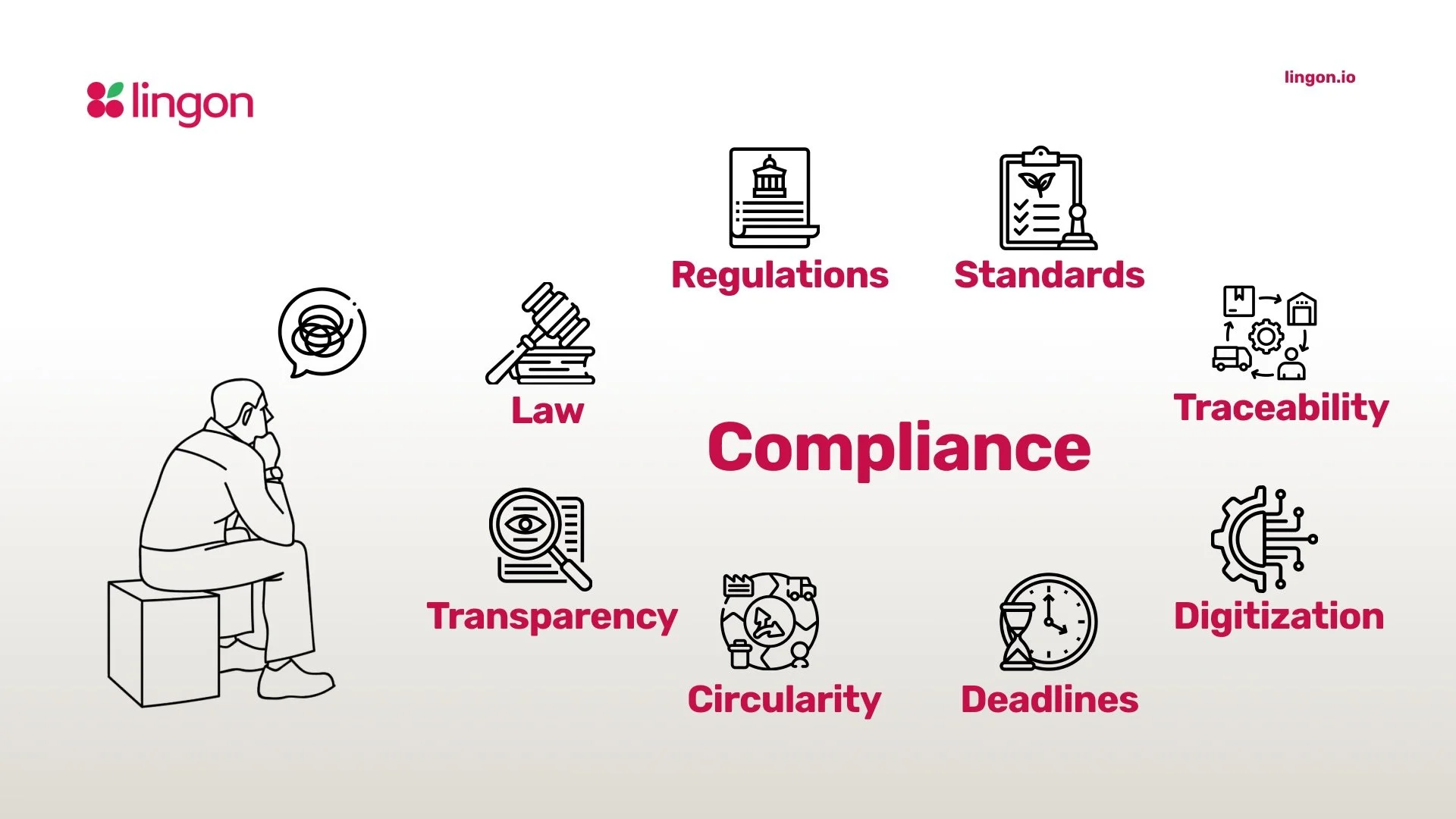
One of the main barriers to adoption is uncertainty around standards.
Many companies hesitate to invest in Digital Product Passports due to concerns about:
evolving regulatory requirements
unclear technical standards
potential misalignment with future frameworks
Standards as Guidance, Not Constraints
It is important to understand that standards are designed to support implementation — not restrict it.
Regulations such as ESPR and CSRD define the goals:
improved sustainability
increased transparency
circular product systems
However, they often leave room for companies to determine how these goals are achieved.
The Risk of Waiting
Waiting for finalized standards may seem like a safe approach, but it carries risks.
Companies that delay may:
fall behind competitors
miss early innovation opportunities
face rushed implementation later
Early adopters often define best practices and gain a competitive advantage.
Why Companies Should Start Now
The transition to a circular and transparent economy takes time.
Companies that begin today can:
gain visibility into their supply chains
identify inefficiencies and improvement opportunities
build trust with customers
prepare for future regulatory requirements
Starting early also allows companies to shape how Digital Product Passports align with their brand and business model.
How Lingon Supports Flexible DPP Implementation
Lingon helps companies navigate uncertainty by providing flexible Digital Product Passport solutions.
Our platform enables businesses to:
structure product data
improve traceability
support compliance with evolving regulations
adapt to future standards
Rather than waiting for fixed rules, companies can begin building scalable systems today.
Conclusion
Digital Product Passport regulations are reshaping how products are designed, documented and managed.
While standardization is still evolving, the direction is clear: greater transparency, circularity and accountability.
Companies that wait for perfect clarity risk falling behind.
Companies that start now have the opportunity to innovate, lead and define how Digital Product Passports are implemented in practice.
Most Important Insights
Key takeaways from this article:
EU regulations such as ESPR and CSRD are driving Digital Product Passport adoption.
The furniture industry faces significant sustainability and transparency challenges.
Standardization is evolving, but it should not delay implementation.
Early adopters of Digital Product Passports gain competitive advantages.
Flexible platforms like Lingon help companies adapt to changing regulatory requirements.
Learn more about the difference between Regulations and Standards in the renown sources below
What is the Ecodesign for Sustainable Products Regulation (ESPR)?Greenly | Certified B Corp 2024
CSRD: The Ins and Outs of the EU Regulation with EYSustainability Magazine 2024
A Landscape of Standards for the Digital Product Passport (EUOS TWG)StandICT.eu 2023