
Digital Product Passport Software
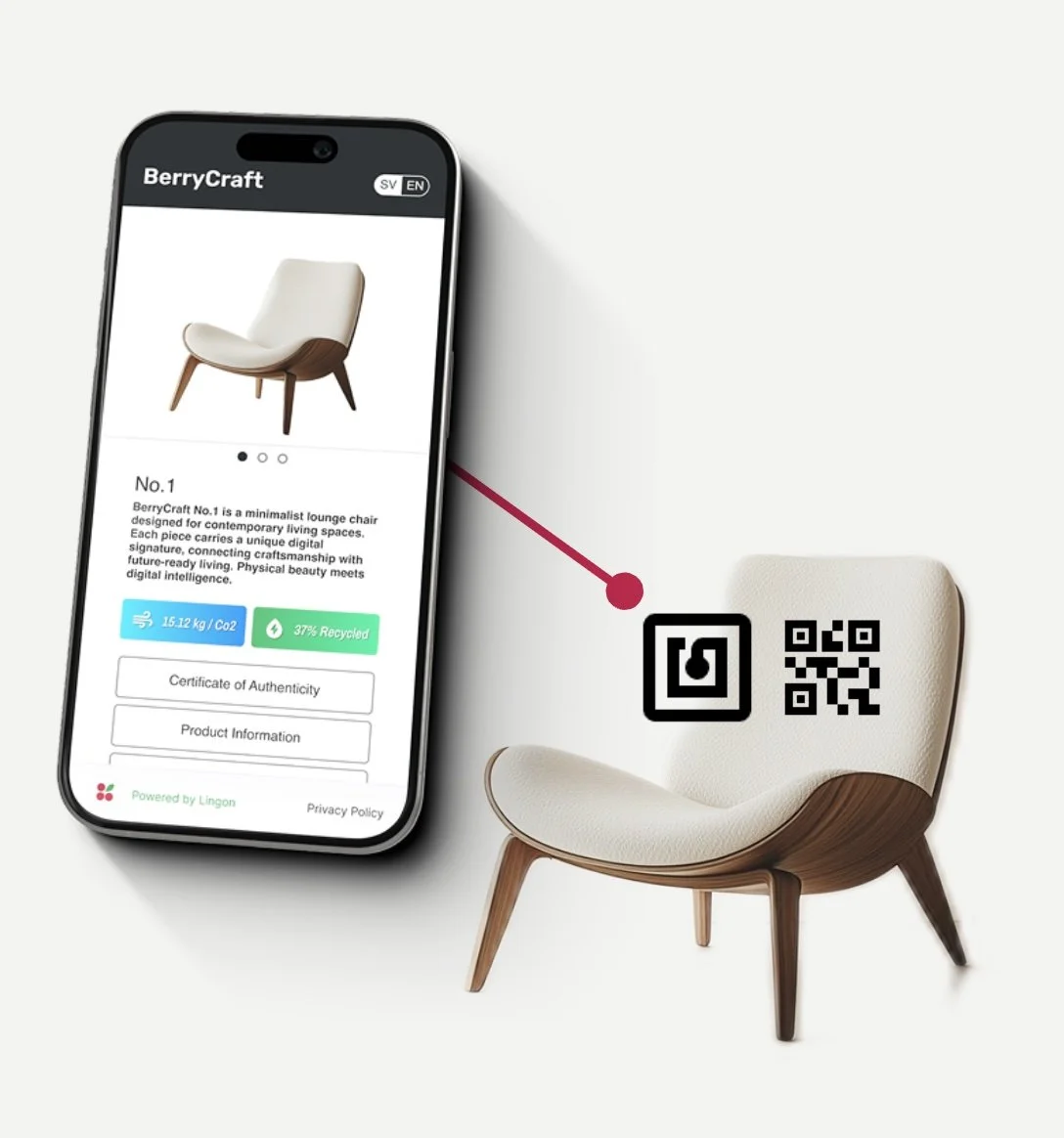
Create, manage, and scale Digital Product Passports with structured product data, supplier traceability, and connected product experiences.
A Digital Product Passport connects a physical product to a structured digital record containing information about its materials, origin, compliance, repair, and end-of-life handling. Lingon helps brands and manufacturers build, manage, and scale Digital Product Passports with better product data, stronger supplier traceability, and a more connected customer experience.
What is a Digital Product Passport?
A Digital Product Passport is a digital record that gives each product a persistent, structured identity. It can include information about materials, components, origin, environmental performance, repair instructions, recycling guidance, and supporting documentation. Typically, the passport is accessed through a QR code or other digital identifier attached to the product.
For manufacturers, a Digital Product Passport helps organize the data needed for compliance, traceability, and product transparency. For customers, it creates easier access to information about care, repair, and provenance. For circular business models, it helps products carry useful information throughout their lifecycle.
Why Digital Product Passports matter
Digital Product Passports are becoming an important part of how product information is managed and shared. They help companies move from disconnected files and manual documentation to structured, reusable product data that supports compliance, supply chain collaboration, and better customer communication.
They also create value beyond regulation. A well-designed DPP can support product storytelling, service, resale, repair, refurbishment, and recycling.
What data goes into a Digital Product Passport
The exact content of a Digital Product Passport depends on the product category and applicable requirements, but common data areas include:
product identity and technical specifications
material and component composition
supplier and origin data
certificates and declarations
repair and maintenance guidance
recycling and end-of-life instructions
sustainability and lifecycle information
How Lingon helps you create and manage DPPs
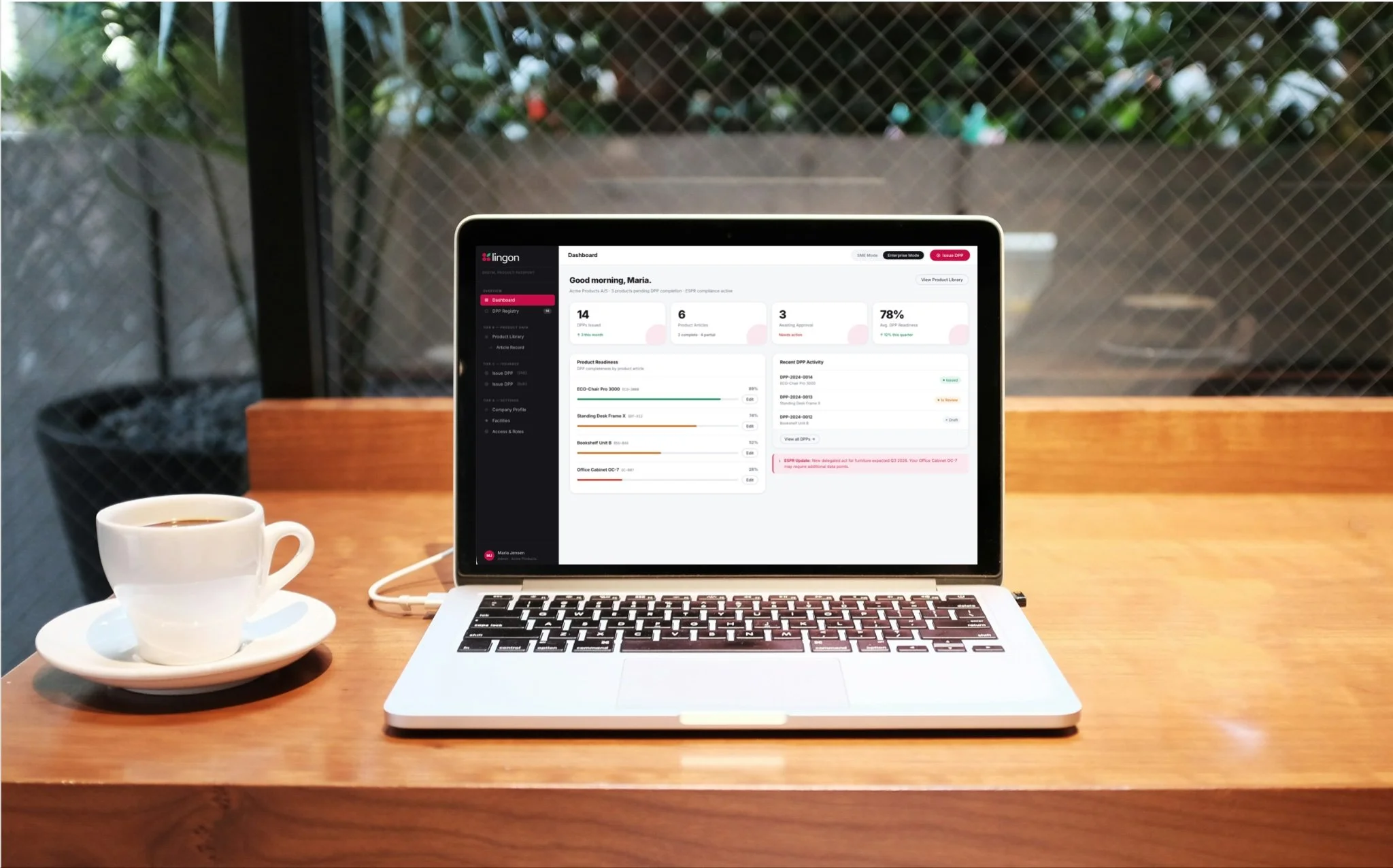
Lingon helps brands and manufacturers collect, structure, verify, and publish the product data needed for Digital Product Passports
Collect product data from multiple sources
Bring together information from spreadsheets, PDFs, supplier documents, ERP systems, PIM systems, and PLM systems in one place.
Structure and improve product data
Turn fragmented information into structured product records, identify missing fields, and create a clearer foundation for DPP workflows.
Collect supplier data
Send requests for missing information, follow up with suppliers, and improve visibility across the value chain.
Enable connected products
Link products to their Digital Product Passports with QR codes or other identifiers, and keep information accessible throughout the product lifecycle.
Preparing for ESPR requirements
The ESPR makes the Digital Product Passport a central mechanism for product information where ecodesign measures are adopted, but the detailed passport requirements are defined through product-specific delegated acts. In the EU’s 2025–2030 working plan, furniture is listed as a priority final product with an indicative adoption timeline of 2028. For lighting, “light sources and separate control gears” appear in the carried-over energy-related product work with an indicative adoption timeline of 2029.
Digital Product Passports for furniture and lighting
Lingon is especially relevant for industries where products involve multiple materials, supplier tiers, technical documentation, and end-of-life considerations. Two strong examples are furniture and lighting.
Explore Digital Product Passports for furniture
Explore Digital Product Passports for lighting
Contact us
Interested in working together? Fill out some info and we will be in touch shortly. We can’t wait to hear from you!