
Is Blockchain the Best Technology for Digital Product Passports in the Furniture Industry?
Digital Product Passports (DPPs) are becoming a central tool in the transition toward more transparent and sustainable product systems. By providing structured data about a product’s origin, materials and lifecycle, DPPs aim to improve traceability and enable circular business models.
However, this raises an important question:
How can this data be stored, secured and shared in a reliable and scalable way?
Blockchain technology is often presented as a solution — but is it the right foundation for Digital Product Passports?
What Is Blockchain and How Does It Work?
Blockchain is a decentralized digital ledger that records data across multiple systems.
Instead of relying on a single central authority, blockchain allows multiple participants to:
share data
verify transactions
maintain a consistent record
Once data is recorded, it cannot be altered without consensus, making it highly secure.
This makes blockchain particularly relevant for applications that require trust and transparency.
Why Blockchain Is Relevant for Digital Product Passports
Digital Product Passports require reliable data that spans the entire product lifecycle.
Blockchain supports this by enabling:
secure and tamper-proof records
transparent data sharing across stakeholders
traceability from raw materials to end-of-life
For example, in the furniture industry, blockchain can track:
material sourcing (e.g. certified wood)
manufacturing processes
logistics and distribution
repair and reuse history
This creates a verifiable product history accessible through a Digital Product Passport.
Key Advantages of Blockchain for DPPs
Data Integrity and Security
Blockchain ensures that once product data is recorded, it cannot be altered.
This reduces the risk of:
fraud
data manipulation
greenwashing
End-to-End Traceability
Blockchain enables a continuous record of a product’s lifecycle.
This supports transparency across supply chains and improves accountability.
Decentralized Data Ownership
Instead of relying on a single database, blockchain distributes data across multiple nodes.
This improves resilience and reduces the risk of data loss.
Long-Term Data Durability
Furniture products can last for decades.
Blockchain ensures that product data remains accessible and secure over long time periods.
Limitations of Blockchain in Digital Product Passports
While blockchain offers strong advantages, it is not a complete solution on its own.
Companies also need:
user-friendly interfaces
data input systems
integration with existing IT infrastructure
scalable data management
Technologies such as QR codes, NFC tags and APIs are still required to connect physical products to digital systems.
In practice, Digital Product Passports rely on a combination of technologies rather than a single solution.
The Role of Blockchain in Future Product Systems
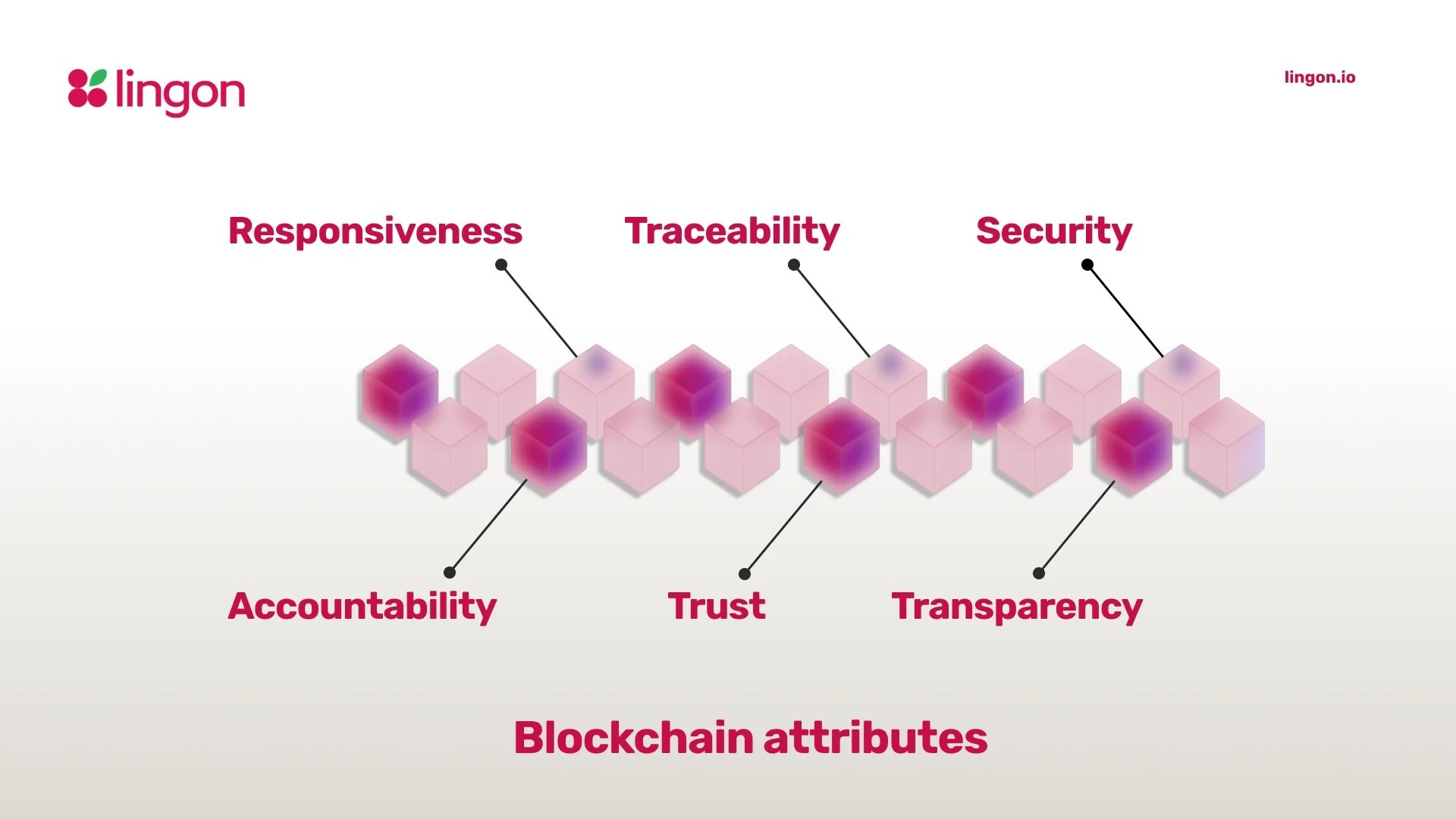
Blockchain is well suited for long-term, transparent and verifiable product systems.
It can support:
circular economy models
second-hand markets
product authentication
lifecycle tracking
As industries move toward more connected and data-driven products, blockchain can act as a foundational layer for trusted data.
How Lingon Uses Blockchain in Digital Product Passports
Lingon integrates blockchain as part of a broader Digital Product Passport solution.
Our platform combines:
blockchain for data integrity
structured product data
digital identities (digital twins)
user interfaces for interaction
This allows companies to:
verify product authenticity
track lifecycle data
build trust with customers
support compliance with EU regulations
Rather than relying on blockchain alone, Lingon uses it as part of a complete system for Digital Product Passports.
Conclusion
Blockchain is not the only technology needed for Digital Product Passports, but it is one of the most important.
Its ability to secure, verify and maintain product data makes it a strong foundation for transparent and traceable product systems.
For the furniture industry, where products have long lifecycles and complex supply chains, blockchain can play a key role in enabling trusted Digital Product Passports.
The companies that combine blockchain with strong data structures and user-friendly systems will be best positioned to lead in the next generation of circular and transparent industries.
Most Important Insights
Key takeaways from this article:
Blockchain provides secure and tamper-proof data for Digital Product Passports.
It enables end-to-end traceability across the product lifecycle.
Blockchain supports transparency and reduces the risk of fraud and greenwashing.
Digital Product Passports require multiple technologies, not just blockchain.
Platforms like Lingon combine blockchain with structured data and user interfaces.
Learn more about the benefits of using Blockchain for sustainability goals from the renown sources below
Blockchain Adoption for Sustainable Supply Chain Management: Economic, Environmental, and Social Perspectives - Frontiers 2022
Blockchain's Role In Pioneering A Sustainable Business Landscape - Forbes 2023
Blockchain and sustainability: the hidden potential- Avvale 2024