
Beyond Digital Product Passports: How Digitalization Creates Competitive Advantage
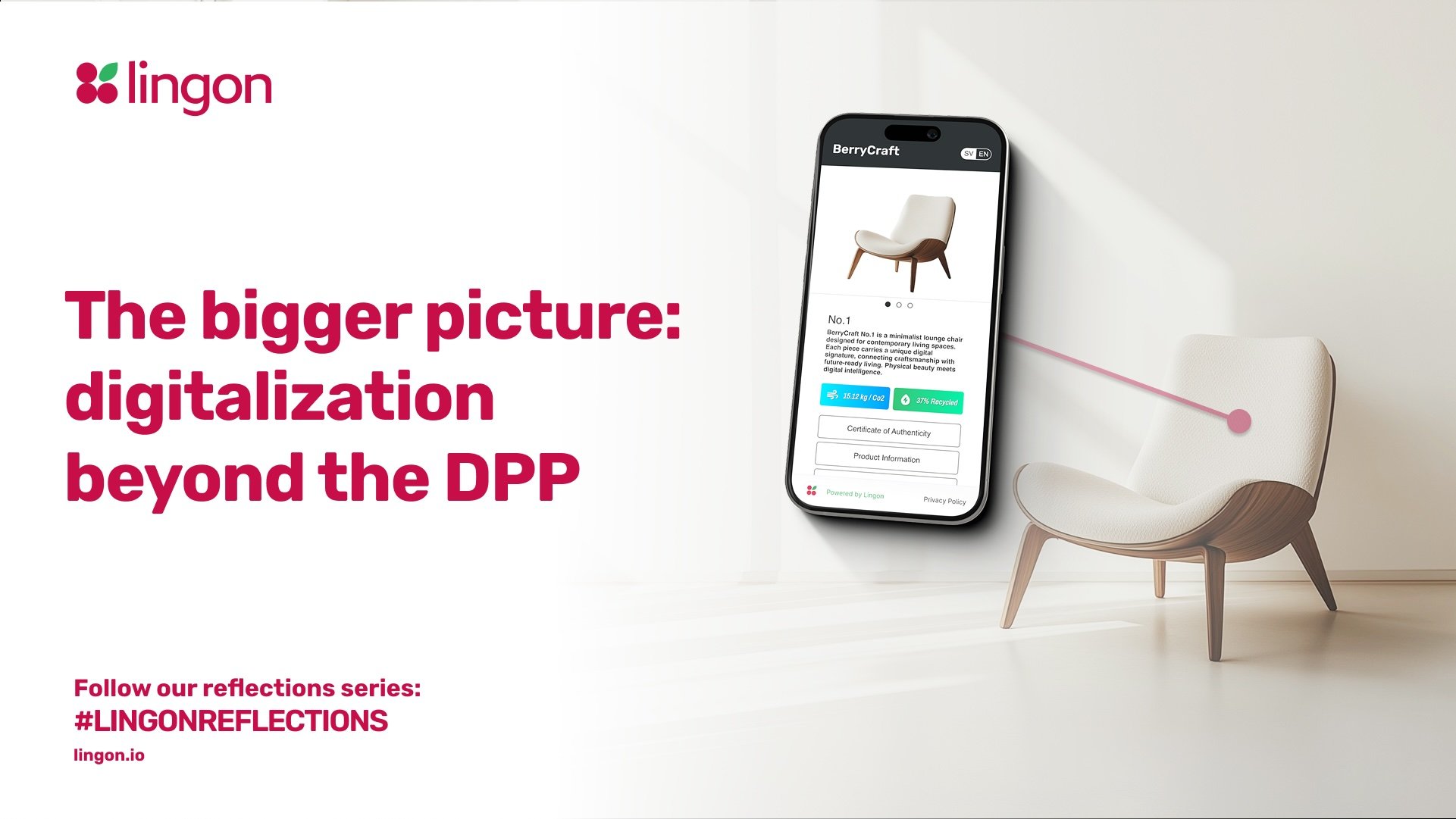
Digital Product Passports (DPPs) are becoming a standard for product transparency and sustainability.
By providing structured information about a product’s origin, materials and lifecycle, DPPs help companies meet regulatory requirements and improve traceability.
However, the real opportunity lies beyond compliance.
When product data becomes digital, accessible and interactive, it can unlock new ways of creating value, strengthening customer relationships and differentiating products in competitive markets.
What Is a Digital Product Passport?
A Digital Product Passport (DPP) is a digital record that contains structured information about a product’s lifecycle.
This includes:
material composition
manufacturing origin
environmental impact
repair instructions
recycling guidance
Digital Product Passports are designed to support transparency, traceability and circular product systems.
Why Digital Product Passports Are Just the Starting Point
Digital Product Passports establish a baseline for transparency.
However, when all companies meet the same requirements, DPPs risk becoming standardized data sets with limited differentiation.
To create competitive advantage, companies need to go beyond compliance and use product data strategically.
Turning Product Data into Brand Value
Digital Product Passports can be used as more than a data repository.
They can become a platform for storytelling and engagement.
Communicating Material Origins
Instead of simply listing materials, companies can explain:
where materials come from
how they are sourced
what makes them sustainable
This creates emotional and informational value for customers.
Supporting Product Longevity
Providing repair guides, maintenance instructions and lifecycle insights helps customers extend product use.
This supports circular economy principles while reducing costs for consumers.
Creating Cultural and Brand Connections
Products often have connections to craftsmanship, design traditions or regional identity.
Digital Product Passports can communicate these elements and strengthen brand identity.
From Compliance to Competition
As Digital Product Passports become widespread, companies will compete not only on products, but on how they present and use product data.
This creates a new layer of competition:
who provides the most transparent information
who creates the best customer experience
who delivers the most value through product data
This shift benefits both companies and consumers by raising the standard of transparency across industries.
The Role of Digitalization
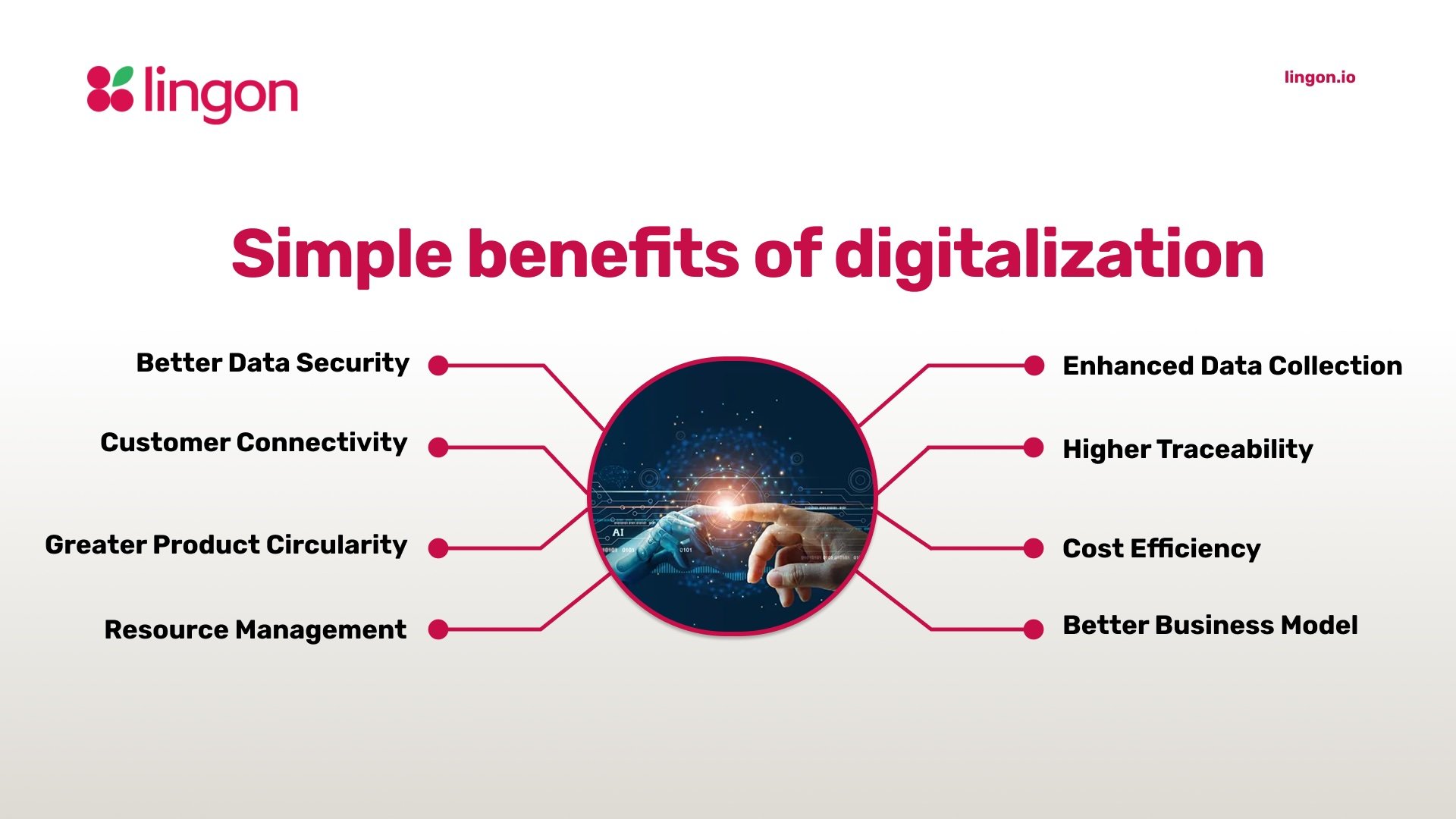
Digital Product Passports are part of a broader transformation driven by digitalization.
When product data becomes connected and usable, companies gain access to powerful insights.
Data-Driven Decision Making
Companies can analyze:
customer interactions
product usage patterns
lifecycle performance
This supports better product design and business decisions.
Smarter Production Systems
Real-time data enables companies to:
reduce waste
optimize resource allocation
respond quickly to supply chain changes
Direct Customer Relationships
Digital Product Passports create a direct connection between brands and customers.
This allows companies to:
communicate directly with users
provide updates and services
build long-term relationships
How Lingon Enables “Beyond DPP”
Lingon helps companies move beyond basic Digital Product Passports.
Our platform enables businesses to:
transform product data into interactive experiences
build direct customer relationships
create new engagement and service models
strengthen brand differentiation
By combining structured data, digital interfaces and product identity, Lingon helps companies unlock the full value of digitalization.
Conclusion
Digital Product Passports are an important step toward transparency and sustainability.
However, they are only the beginning.
The real opportunity lies in how companies use product data to create value, differentiate their offerings and build stronger connections with customers.
Businesses that embrace digitalization beyond compliance will be best positioned to compete in a more transparent and data-driven future.
Most Important Insights
Key takeaways from this article:
Digital Product Passports provide a baseline for product transparency.
Competitive advantage comes from using product data beyond compliance.
DPPs can support storytelling, customer engagement and brand differentiation.
Digitalization enables data-driven decision making and smarter production.
Platforms like Lingon help companies unlock the full value of product data.
Learn more about the benefits of digitalization from renown sources below
Supply Chain 4.0: The Next Generation Digital Supply Chain –McKinsey & Company
Digital Supply Chain Explained -NetSuite
The Role of Digital Transformation in Manufacturing –Epicflow Multi-Project Resource Management Software
How Digitalization Enhances Customer Experience –Financial Times