
Do Digital Product Passports Make the Furniture and Lighting Industries More Sustainable?

Digital Product Passports (DPPs) are often discussed as a regulatory requirement under upcoming EU sustainability legislation. However, their potential goes far beyond compliance. For industries such as furniture and lighting, Digital Product Passports can become a powerful tool for improving transparency, enabling circular product lifecycles and reducing environmental impact.
Yet an important question remains: Do Digital Product Passports truly make products more sustainable — or do they simply document sustainability?
Why Some Critics Question the Impact of Digital Product Passports
Within the furniture industry, some stakeholders argue that Digital Product Passports mainly function as reporting tools.
From this perspective, DPPs document sustainability metrics without directly improving environmental performance.
However, this view overlooks the broader role that structured product data can play in enabling transparency, accountability and circular product systems.
When implemented effectively, Digital Product Passports do more than report sustainability — they help enable it.
How Digital Product Passports Improve Sustainability
Digital Product Passports contribute to sustainability in several important ways, particularly in industries such as furniture and lighting where product lifecycles are long and material complexity is high.
Material Transparency and Traceability
Digital Product Passports provide detailed transparency about materials, components and production processes. By documenting material origins and composition, DPPs enable manufacturers to identify environmentally harmful materials and transition toward more sustainable alternatives. Improved traceability also increases accountability across supply chains and helps companies make more informed sourcing decisions.
Supporting Circular Economy Models
One of the most significant contributions of Digital Product Passports is enabling circular product lifecycles. DPPs make key product information accessible to stakeholders across the lifecycle, including repair providers, recyclers and consumers.
This information can include:
repair instructions
material composition
recycling guidance
product lifespan information
By enabling repair, reuse and recycling, Digital Product Passports help extend product lifetimes and reduce waste.
Resource Efficiency and Production Optimization
Digital Product Passports also support more efficient use of materials and resources.
By providing detailed visibility into production processes and material flows, companies can identify inefficiencies and optimize resource use.
This can lead to:
reduced material waste
lower energy consumption
improved manufacturing efficiency
Over time, these improvements contribute directly to reduced environmental impact.
Why Digital Product Passports Matter for Furniture and Lighting
Furniture and lighting products often contain complex material combinations and long lifecycles.
These characteristics make transparency particularly important.
Digital Product Passports allow manufacturers to document product composition, track materials across the supply chain and support circular practices such as repair and refurbishment.
For durable products, structured product data becomes a key foundation for sustainable product management.
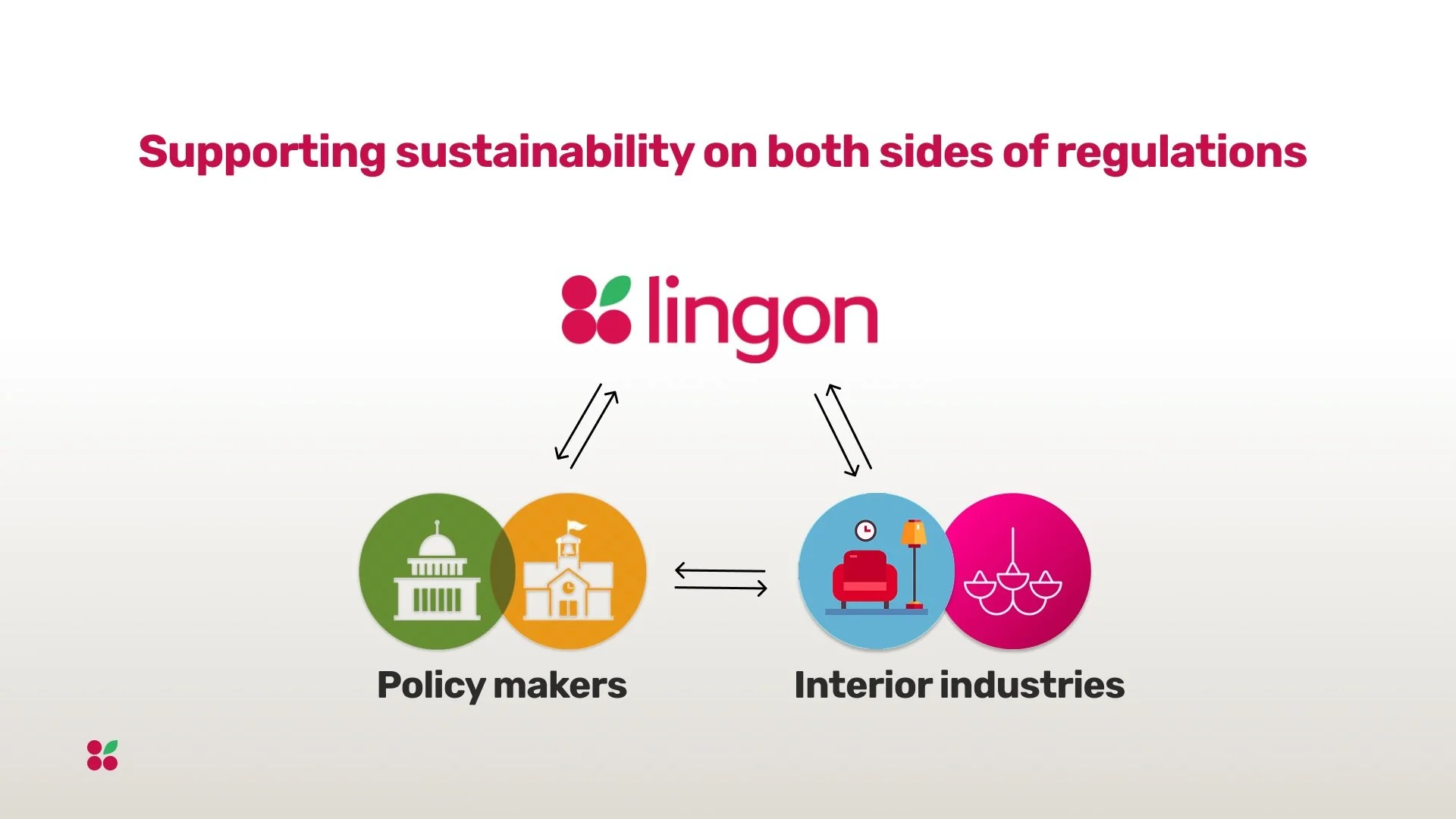
How Lingon Supports Sustainable Product Data
At Lingon, sustainability and circularity are central to the design of our platform.
We focus on industries where structured product data can have the greatest impact — particularly furniture and lighting.
Lingon enables manufacturers to structure product data in ways that support:
Digital Product Passports
material transparency
lifecycle traceability
regulatory compliance
By helping companies organise product data, Lingon contributes to more transparent and circular product ecosystems.
Conclusion
Digital Product Passports are sometimes seen primarily as a reporting mechanism. In reality, they can be a practical tool for improving sustainability across the entire product lifecycle.
By increasing transparency, supporting circular product systems and improving resource efficiency, DPPs help companies move from sustainability claims to measurable action.
For industries such as furniture and lighting, Digital Product Passports represent an important step toward more durable, transparent and circular products.
Most Important Insights
Key takeaways from this article:
Digital Product Passports do more than document sustainability — they help enable it.
DPPs improve sustainability by increasing transparency across supply chains.
Digital Product Passports support circular economy practices such as repair, reuse and recycling.
Structured product data helps manufacturers optimize materials and reduce resource waste.
For furniture and lighting companies, DPPs provide a foundation for more sustainable product lifecycles.